Showing posts with label Will Hooper. Show all posts
Showing posts with label Will Hooper. Show all posts
Friday, 26 March 2010

Tuesday, 23 March 2010
Looking back at your preliminary task, what do you feel you have learnt in the progression from it to the full product?
- Our knowledge of Final Cut Pro and Soundtrack Pro has become greater and we have become more fluent in how we use it.


- We have realized the importance of blogging what we have done. It helped us to have a clearer picture of what we need to do and consolidate all the work we had done so far.
- We incorporated the use of Adobe Illustrator and Adobe Photoshop to create a more professional look to our product.


What have you learnt about technologies from the process of constructing this product?
During the process of filming and making our opening sequence, we learned:
- How to make animated titles,
- How to become mo
 re efficient with the software such as Soundtrack Pro, Final Cut Pro and LiveType,
 To use p
 rograms like Adobe Illustrator and PhotoShop, and add files made on there onto Final Cut.
- We had some problems with the technology, for example, the microphone did not always pick up the sound (which we had to dub over later).
- We also had difficulties trying to sync the sound and music with the film on Final Cut - this was the only time we needed any help with the process.
How did you attract/address your audience?
The topic being discussed would attract a certain audience due to relativity of the topic. It covers current issues and addresses the audience in a way that people in a similar situation can relate to, especially the plot and the main character.
Feedback:
- Feedback was mostly positive, feedback that wasn't positive was, however, constructive towards our final cut.
- We decided to keep the pace of our earlier shots as slow as we did because we felt that that time of day (morning) is not fast-paced, so therefore would not be a true representation of time period.
Who would be the audience and why?

- The film would be a 15 certificate, we agreed on this for two reasons:
- The film contains characters in stressful, high-pressure life events, meaning that the language used could be less restrained. There is no reason why we thought it should be higher than a 15 because it would not fit the criteria of an 18 film.
- The topic of unemployment would not have as much relevance, or importance for possible viewers under the age of 15; because many people under 15 do not have a job and the topic might be seen by many young people as 'unappealing'.
- A more specific demographic that might be people who have been recently affected by the economic downturn. Viewers from this category would be more likely to relate to the plight of the main character.
What kind of media institution might distribute your media product and why?
- A rarely portrayed film topic, a current, British film about unemployment might be distributed by a more independent film institution, such as Working Title or Pathe.

How does your media product represent particular social groups?

It's more
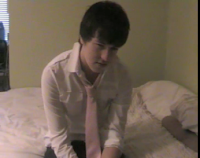 of a fictional portrayal rather than making a social comment about men of a certain age having a mid-life crisis and it just so happens to be that redundancy is the cause of this.
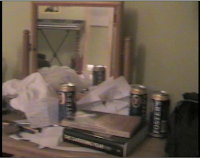
The mise-en-scene as a whole, especially the cans of Fosters and the strewn bits of paper, represents how a man who has just been made redundant can reduce himself to excessive drinking and generally falls into a messy life style.
Thursday, 18 March 2010
In what ways does your media product use, develop or challenge forms and conventions of real media products?
Conventions:
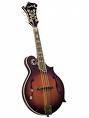
- Sound: Mandolin - rarely used for film scores. More background music than dominant and central to the point of the visuals. Creates a mood and atmosphere as opposed to relating to the plot.
- Editing: Reversed plot timeline (starts at the end scene and then goes back in time). Slow shots when the character is on his bed show that he is thinking about his plight. In contrast to the triplets - not seen often, and gives the sequence a more upbeat rhythm, show


 ing that he is happy.
- Cinematography: Zoom in at the beginning - shows the central character, getting closer to him shows the relationship the audience will have with the character. Walking into the character happens at the end - meaning that the plot has gone full-circle.


- Mise-en-scene: Pathetic fallacy used when character is walking to work - captures his positive mood at that time. Untidiness of his room mirrors the untidiness of his mental well-being after he lost his job.
- Plot: Unconventional, yet current and newsworthy topic is being discussed in this film. Because of the unconventionality of the film, it is highly likely that it would get substantial news coverage.
Thursday, 4 February 2010
Production Schedule
We filmed our sequence in this order today.
-mid-shot of mark sat on the bed
-mid shot of desk, camera swings left to mark sat on the bed
-close up of mark's face
-close up of mark's hand hitting the alarm clock
-close up of mark's hand moving away from alarm clock
-brushing teeth scenes
-making toast scenes
-eating toast scenes
-grabbing key scenes
-water dispenser scenes
It went fairly well, we hope to film the rest of our sequence in two weeks time.
In the next shoot we will film:
-mid shot of kitchen, marks roommate walks in
-mid shot of kitchen 2, mark is late for work
- bike scenes
- milk scenes
We will also re-film:
-eating toast scenes
-making toast scenes
Monday, 1 February 2010
Animatic
We created an animatic to portray the basic feel of what our first draft of our film would be. We took images from our storyboard and showed the rough time of each clip to deliver a similar imitation of the pace of our first draft.
Thursday, 28 January 2010
Main Character Profiles
Here are character profiles for the two main protagonists in our opening sequence:
Mark Howard:
- Works as a Financial Advisor for Optimum Bank,
- Has worked for Optimum for nearly 10 years,
- Before that, he studied a Business degree at the London School of Economics,
- His father worked for Optimum for over 40 years,
- Although he is successful, he has often been overlooked for promotion,
- This has made him increasingly unhappy about his job,
- He feels that life is becoming more monotonous (as shown by his morning routine).


Vivian Ritter:
- Mark's girlfriend,
- They started dating five years ago when Vivian was Mark's secretary at Optimum,
- However, two years ago, she found a more successful job as a consultant for Santander,
- This means that she has to travel around Europe a lot,
- Vivian is more optimistic about life than Mark, but she is becoming increasing fed up with Mark's unhappiness.
Wednesday, 27 January 2010
Storyboard


This is our storyboard created in pre production. It was created as a visual reference allowing our group to see how the frames follow one another. When we come round to shooting our sequence, this may not be an exact replica of what the final result will be due to which location we decide to film at.
Tuesday, 26 January 2010
Working Title Amendments
Following discussions within the group we decided that the working title we had settled with was not that effective, so we rethought the title. Whilst renaming the title we took into account the tripling aspect of our work. What Went Wrong was the outcome of our discussion. This title is ambiguous as it has two possible meanings. Firstly, it is can be interpreted as a question "What went wrong?" and also it could be stating what went wrong before the film reveals it to the audience. Another factor is because of the historical reputation of question marks in film titles at the box office, previously mentioned in our working title post.
Thursday, 14 January 2010
Initial Ideas
Our preliminary idea was a mockumentary (in the style of Warp films; Shane Meadows etc.) about a gameshow host that struggles to enjoy his job because he chose to host a very poor show, getting bad press, ruining his career. The subtle humour would be too difficult to pull off as many people might not get it. It would also be too difficult to achieve successfully in such a short time frame.
Our second idea was based on a short story one of us wrote for English coursework a few months ago. Using an original piece by one of us meant that we would have inspiration and complete artistic license over what we could do. This idea is the one that we decided to do because of its relevance in today's society and the scarcity of films in our intended genre/theme at the moment. However, because of the longevity of the film production process, there are likely to be a lot more recession-based films in the near future.
Our second idea was based on a short story one of us wrote for English coursework a few months ago. Using an original piece by one of us meant that we would have inspiration and complete artistic license over what we could do. This idea is the one that we decided to do because of its relevance in today's society and the scarcity of films in our intended genre/theme at the moment. However, because of the longevity of the film production process, there are likely to be a lot more recession-based films in the near future.
Tuesday, 5 January 2010
Continuity Exercise
We did an exercise to put into practise the rules of film continuity and the 180 degree rule.
Induction Practical
As an induction to the practical process, we were set a brief to create an opening to a thriller film. Above is our effort.
Subscribe to:
Posts (Atom)